LangChain: The Open-Source Juggernaut That Built the Agentic AI Ecosystem
LangChain became one of the most famous open-source GitHub repositories by providing the standard framework for LLM orchestration. Its modular approach allowed developers to move past simple chatbots and build complex, autonomous AI agents and RAG pipelines.
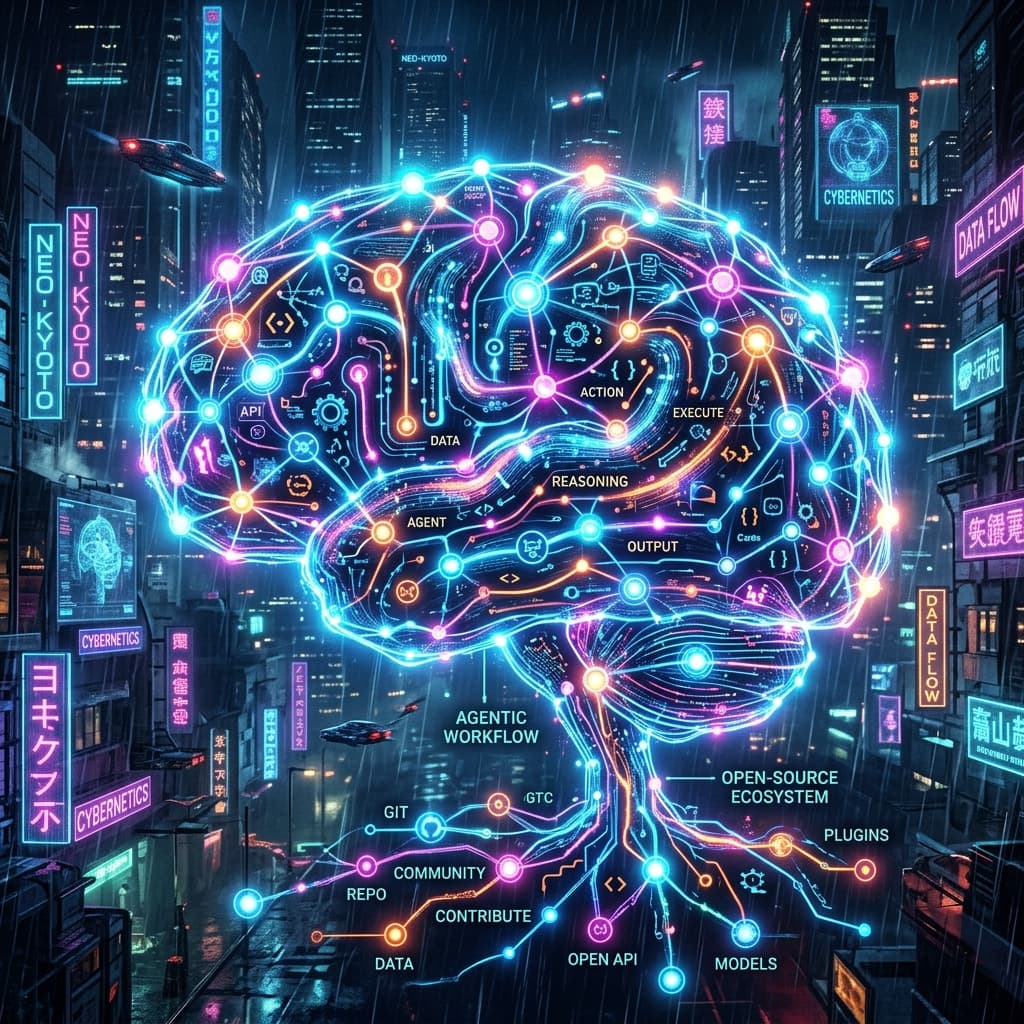
If you look at the GitHub trending page for AI over the last couple of years, one name consistently dominates: LangChain.
What started as a simple open-source project to link LLMs with external tools quickly exploded into a massive juggernaut. It essentially created the standard syntax for how developers interact with artificial intelligence.
Moving Beyond the Chatbot
When ChatGPT first launched, everyone built simple wrappers. You send a prompt, you get a response. But developers quickly realized that to build truly useful applications, AI needed memory, access to the internet, and the ability to execute code.
LangChain provided the missing puzzle pieces. It introduced a modular, composable framework that let you chain together different components. Suddenly, you weren't just chatting with an LLM; you were building an agent.
The Rise of Agentic Workflows
With LangChain, developers started building AI agents capable of autonomous problem-solving. You could hand an agent a complex task—like "Research the latest stock trends, summarize the findings, and email me a PDF report"—and LangChain would orchestrate the LLM, the search API, the PDF generator, and the email client to get it done.
This shift from *conversational* AI to *agentic* AI is what made LangChain viral. It empowered single developers to build automation pipelines that would have required entire engineering teams just a few years ago.
Why Open Source Wins
The success of LangChain proves a crucial point: the future of AI tooling is open source.
By building in public on GitHub, LangChain tapped into the collective brainpower of thousands of contributors. They integrated new models, fixed bugs, and added support for countless vector databases at a speed that a closed-source company could never match.
If you are a developer looking to stand out in the AI era, don't just consume these tools—contribute to them. The open-source ecosystem is moving fast, and getting involved is the best way to keep your skills sharp.