Case 03 · atelier · 2026
Zyrobe
A pipeline that turns a phone photo of clothing into a clean, e-commerce-style product image in 3–8 s.
The brief behind Zyrobe
Zyrobe, earlier called Digital Wardrobe, is the Android wardrobe app for India with an AI stylist, and my most recent project. As team lead, I designed and shipped the machine-learning pipeline behind the app. A user uploads a photo; the pipeline reads the text and attributes from it (OCR through Google's API, and Gemini), generates a clean e-commerce-style image of the item, and shows it in the wardrobe, end to end. I also built the public website, zyrobe.com, and the admin panel that runs the application.
A consumer app, on Google Play, where people photograph their clothes and get outfit suggestions. Each photo becomes a tagged wardrobe item with a clean product picture, and people can try outfits on with AI and ask an AI stylist or the trip planner what to wear. It feels magical when it's fast and useless when it's slow.
What constrained the work
Analyze clothing photos, remove backgrounds and recommend outfits quickly enough for a phone user, within a strict cloud budget. The product also had to be run day to day, with its jobs, queues, server uptime and subscriptions manageable without touching servers.
How Zyrobe is built
- Extract, then recreate. The upload goes through OCR (Google's API) and Gemini to pull out the item's text and attributes; image generation then recreates the item as a clean product image.
- Models as small services. Each step runs behind its own FastAPI service, deployed with Docker, so steps can be upgraded or scaled on their own.
- Cost per image as a design constraint. Each step was chosen and tuned for what it costs per image, not only for quality.
- An admin panel that runs the app. I built the panel that controls the application end to end: its jobs and queues, server uptime, internal configuration and subscriptions.
- Subscriptions through Google Play. Plans are subscriptions billed through Google Play, and the AI features run on credits. Setting up all of the subscriptions with Google Play was part of the admin panel's job.
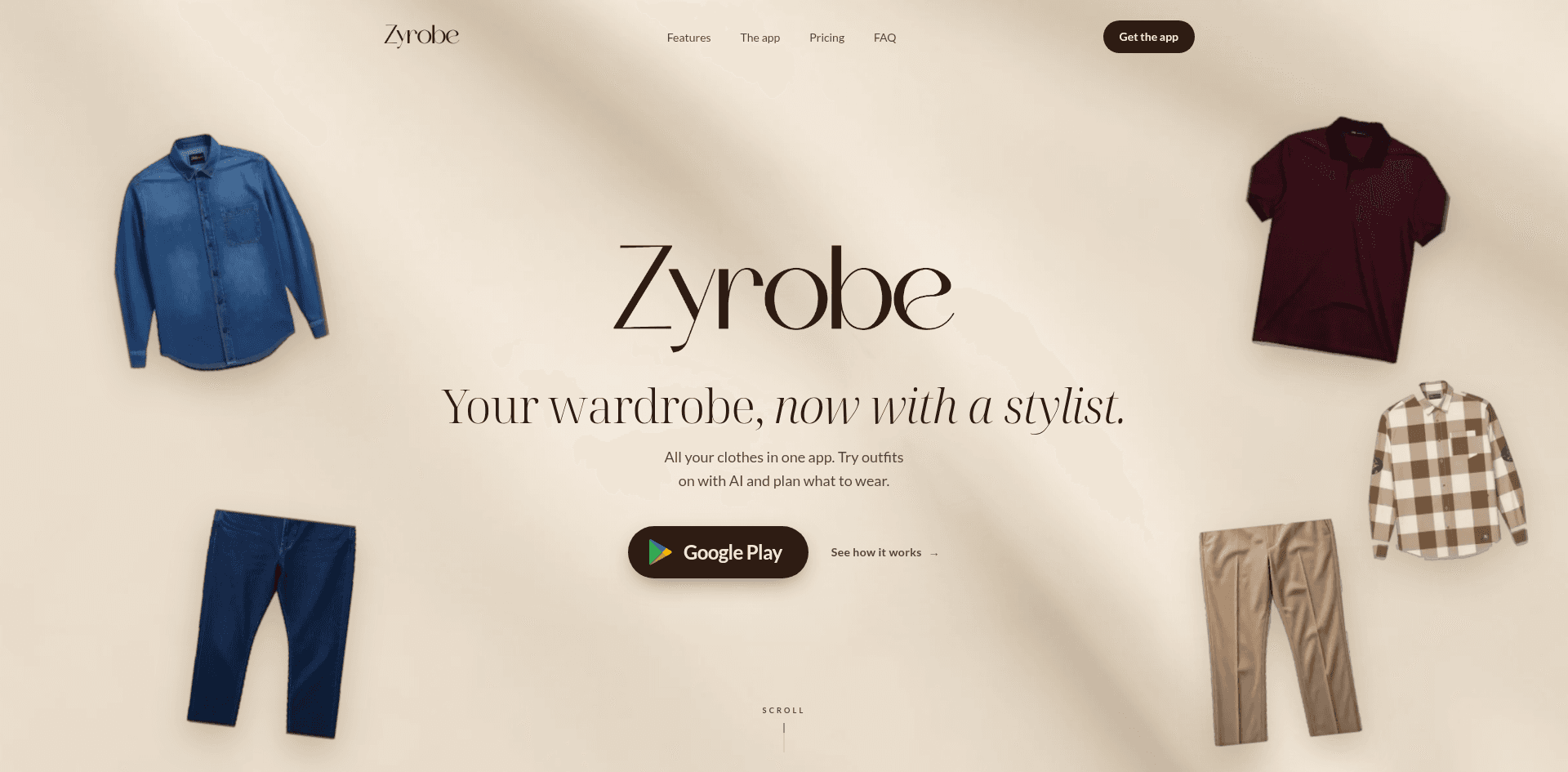
The live product at zyrobe.com 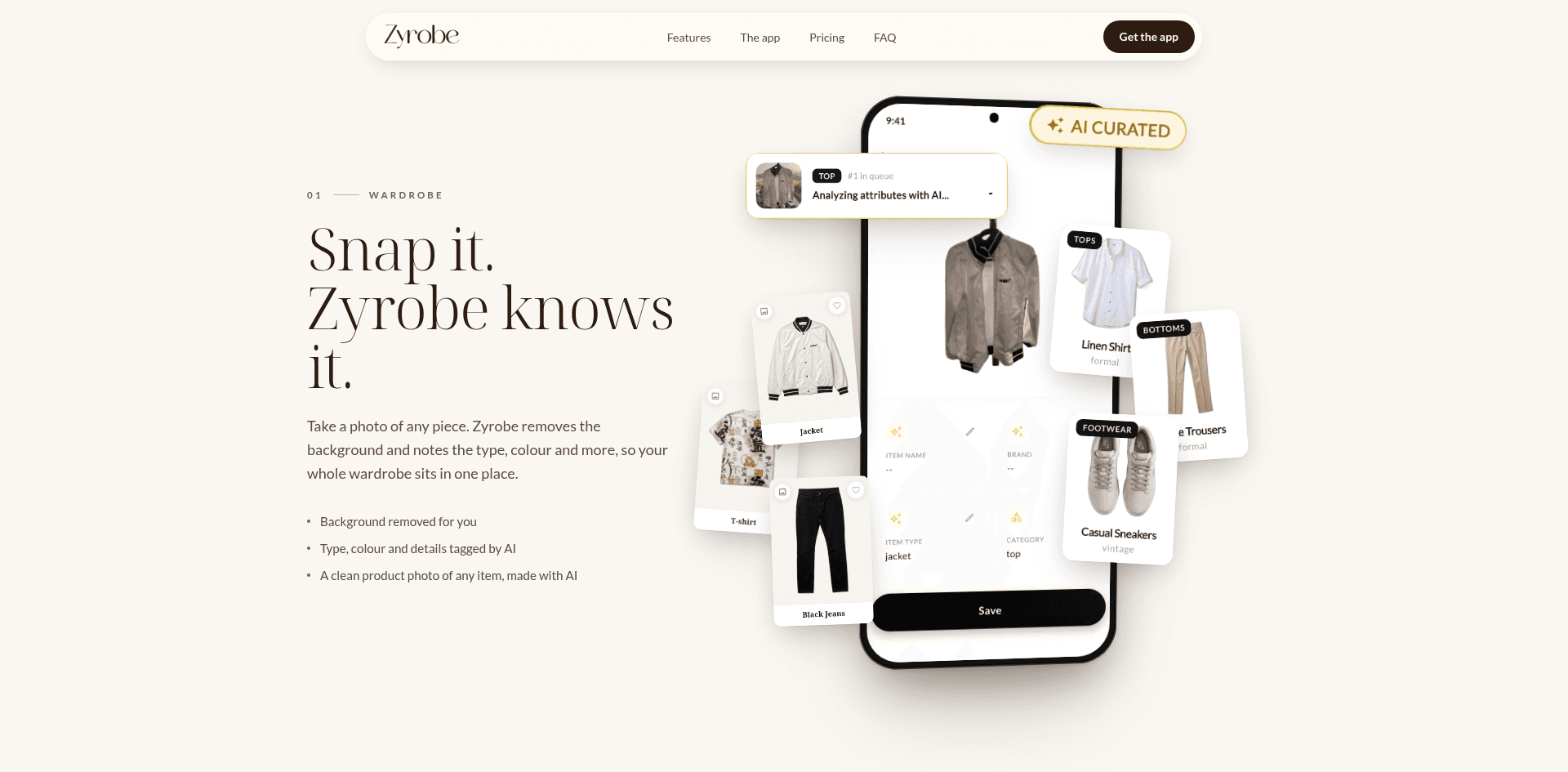
From a photo to a tagged wardrobe item with a clean product picture. 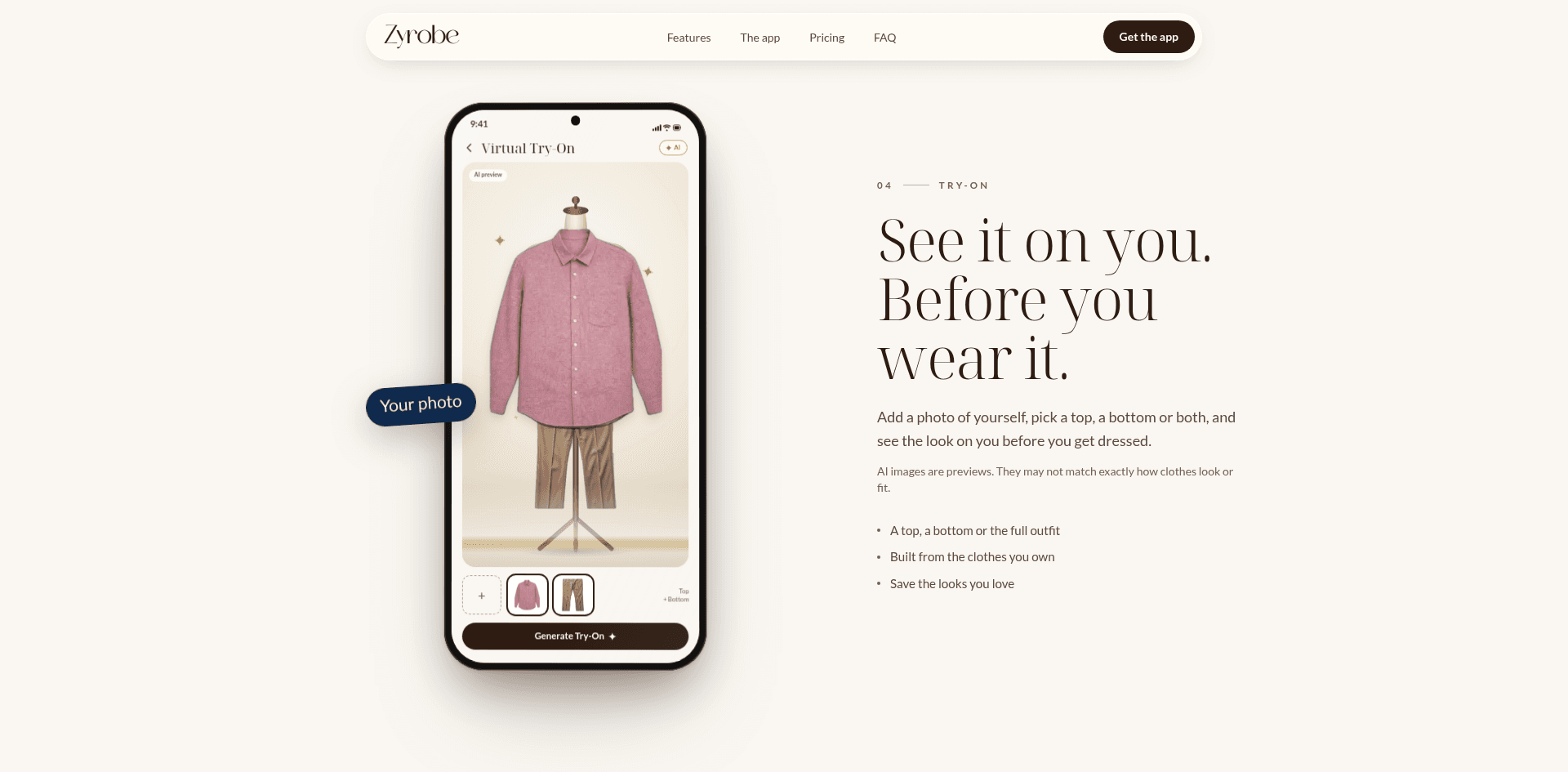
Trying a top and a bottom together before getting dressed. 
The public website on a phone.
Trade-offs and why
Managed AI APIs (Google OCR, Gemini) for extraction instead of training our own: faster to ship, paid per call.
A multi-step pipeline means a few seconds of processing per image, shown to the user as progress rather than a frozen screen.
A purpose-built admin panel instead of managing everything on the servers: more to build, but jobs, queues, uptime, configuration and subscriptions are handled from one place.
What changed, measured
- average time per image, upload to result
- 3–8 s
Upload to finished product image in 3–8 s on average.
Text extraction, attribute recognition and image generation running in production.
Zyrobe is live on Google Play, with its public website at zyrobe.com. I built the website and the admin panel that runs the application.
Lessons from Zyrobe
Measure cost per image from the first day. In ML products the bill scales with every upload.
Latency kills engagement in ML products. The pipeline was built around the seconds a user waits.
An admin panel is how you operate an AI product. Jobs, queues and subscriptions can be managed from one place, without touching servers.
Leading the team mattered as much as the architecture. ML products ship when data, backend and app move together.
Technologies used
- Python
- FastAPI
- Google OCR API
- Gemini
- Image generation
- Docker
- REST APIs
- Admin panel
- Google Play subscriptions
Services used
- Service: AI features in your product · Applied AI engineering
LLM features that work on your real data, measured before they ship.
Where this work happened
- Working with teams in India · Mumbai · Bengaluru
A senior software engineer in Mumbai for Indian startups and product teams, on the same clock as you and close enough to meet in person when a session is worth it. It is for founders with a consumer launch to scale, a media or publishing platform to keep fast, or a PHP system to modernise.
Related writing
- Article: RAG evaluation sets: what goes in and how to score them · 2 November 2026
How to build the set of questions that tells you whether a retrieval-augmented AI feature is getting better or worse, and how to score retrieval and answers separately.